
Air Tightness Testing in Blyth
Get in TouchAt EnergyAxis, we specialise in air tightness testing in Blyth, ensuring your building meets energy efficiency standards and regulations.
Our service identifies air leakage rates using advanced equipment, helping to minimise heat loss and reduce energy consumption.
We cater to various property types, including residential and commercial buildings in Blyth NE24 1.
Get in touch with us today to arrange your air tightness testing.
What Is Air Tightness Testing?
Air tightness testing is a method used to assess the air permeability of a building.
At EnergyAxis, we conduct thorough testing to measure the rate of air escaping from a building in Blyth.
This ensures compliance with Part L of the Building Regulations and helps improve energy efficiency by reducing heating and cooling costs.
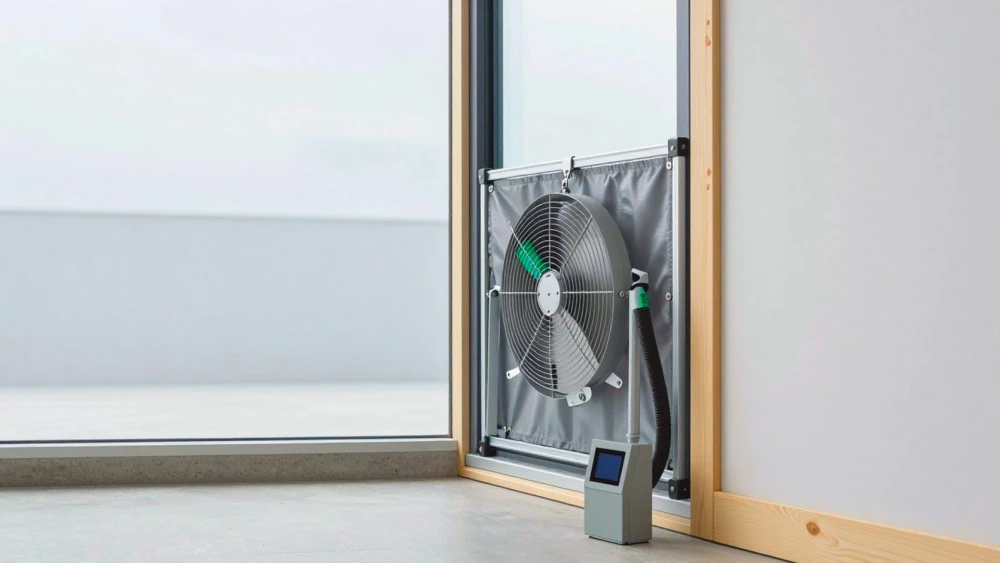
Our expert team uses blower door tests and calibrated equipment designed to detect even the smallest leaks.
During the test, we place a blower door, a temporary seal with a fan, over an exterior door.
When activated, the fan lowers the pressure inside the building, allowing us to calculate the air infiltration rate.
We use sophisticated software to analyse data and pinpoint specific areas of leakage, such as around windows, doors, and ductwork.
Air tightness testing is especially beneficial for residential properties, commercial buildings, and low-energy homes aiming for tighter energy performance standards like Passive House certification.
Understanding and managing air permeability can lead to significant improvements in indoor air quality and thermal comfort.
Contact us for a consultation to ensure your property meets the highest energy efficiency standards.
Book Air Tightness Testing Today
How Much Does Air Tightness Testing Cost in Blyth?
Air tightness testing typically costs between £200 and £400 in Blyth.
The exact cost can vary depending on the size and complexity of the building, with larger structures incurring higher charges.
Residential properties, especially older homes, may require intricate testing due to potential air leaks around window seals and older construction methods, which can influence pricing.
Additional factors that may affect the price include the number of door tests required and whether post-remediation testing is needed.
We use equipment compliant with Building Regulation standards, such as the Retrotec blower door system, to conduct accurate assessments.
This airtightness testing is essential for ensuring energy efficiency, reducing heating and cooling costs in properties ranging from small offices to large commercial complexes.
Energy Performance Certificates (EPCs) are often improved through these measures.
Contact us to get a personalised quote for your property.
What Types of Air Tightness Testing Are Available in Blyth?
We offer various types of air tightness testing methods in Blyth, each tailored to meet specific needs and property types.
Our testing services align with the Building Regulations (Part L) to ensure compliance and energy efficiency.
Standard Pressurisation Test: Suitable for most residential properties, it uses a blower door and a fan to pressurise the building and measure leakage rates. Ideal for proving compliance with domestic energy standards.
Multi-Fan System: Ideal for larger commercial buildings and new developments, requiring higher airflow rates. This method involves multiple fans to generate enough pressure for testing expansive spaces effectively.
Smoke Testing: Helps identify specific areas of air leakage by visually highlighting the leaks. It is often used in conjunction with other tests to pinpoint problem areas.
Intermediate Testing: Conducted during construction to ensure compliance and avoid costly corrections after project completion. It allows builders to make adjustments before final testing.
Each method is designed to ensure your building meets the required standards while optimising energy efficiency.
Contact us to determine the best approach for your property.
How Does Air Tightness Testing Work?
Air tightness testing works through a sequential process involving specific equipment and standards to ensure accuracy:
Preparation: Before testing, all external openings in the building are sealed except for purposeful ventilators. Doors, windows, and other openings are temporarily covered to prevent unintended air exchange.
Pressurisation: We use a calibrated fan, usually mounted in an external doorway, to create a pressure difference of 50 pascals (Pa). This simulates wind pressure and establishes a controlled environment for testing.
Measurement: During the test, air flow rates are precisely recorded using digital manometers to determine the rate of air infiltration or leakage. These measurements are done at multiple pressure differentials to get accurate results.
Analysis: We carefully analyse the data collected to pinpoint specific areas where air leakage occurs. This includes reviewing temperature variations and using smoke pencils or thermal imaging to visually identify leaks.
This process helps determine the building's air permeability levels, ensuring it complies with current Building Regulations and energy efficiency standards.
If improvements are needed, we can suggest practical solutions.
Contact us to schedule your air tightness test in Blyth.
Speak to an Air Tightness Testing Expert
Why Choose EnergyAxis for Air Tightness Testing in Blyth?
At EnergyAxis, we offer precise air tightness testing services backed by years of experience.
We use blower door tests, recognised for their ability to measure air permeability by creating pressure differences between the interior and exterior of the building.
Our equipment can detect air leakages as small as 0.5 m³/h, allowing us to quantify and identify the exact areas needing attention.
We adhere to industry standards such as Part L of the Building Regulations, ensuring every structure meets the necessary energy efficiency requirements.
Our informative reports include detailed data analysis and recommendations for energy-saving improvements, such as sealing gaps around window frames and doors, or upgrading ventilation systems.
Our commitment to customer satisfaction means we are ready to advise on improvement measures if necessary, ensuring your building complies with energy regulations.
Choosing us means choosing quality and reliability in Blyth.
Let's work together to achieve optimal energy efficiency for your property.
Frequently Asked Questions
How Often Should Air Tightness Testing Be Conducted?
Air tightness testing is typically necessary at the completion of a new building or following significant modifications.
For ongoing efficiency, though not obligatory, periodic checks every few years are recommended.
What Preparations Are Needed for an Air Tightness Test?
To prepare for an air tightness test, ensure all intentional openings are sealed, and access to all areas is clear.
This maximises the accuracy of results.
Is Air Tightness Testing Mandatory for All Buildings?
Air tightness testing is mandatory for new builds and major renovations in Blyth, as it ensures compliance with Part L of the Building Regulations.
What Standards Govern Air Tightness Testing?
Part L of the Building Regulations governs air tightness testing, requiring specific leakage targets for different property types and situations.
Can Testing Be Done in Adverse Weather?
Testing is best conducted in stable weather conditions to ensure the accuracy of results, though light rain or moderate wind is usually not a hindrance.
Get a Free Quote for Air Tightness Testing in Blyth
Ready to ensure your building meets all energy efficiency standards?
Contact EnergyAxis today.
We're here to assist with your air tightness testing needs in Blyth.
We cover Blyth (Northumberland)